Why Your Workout Top Rides Up - and What Actually Stops It
Quick Answer: A top rides up when its widest point is above your widest point, so the fabric has nowhere to sit and climbs to the narrower place it fits. On an apple-shaped frame that widest point is the midsection, which means length and hem construction matter far more than size. Look for a longer body, a straight or slightly A-line cut through the waist, and a hem with no elastic - and check the shoulder fit, because a top pulling from above rides up too.
Sizing up gives you a top that is loose at the shoulders and still rides up. It is the wrong lever.
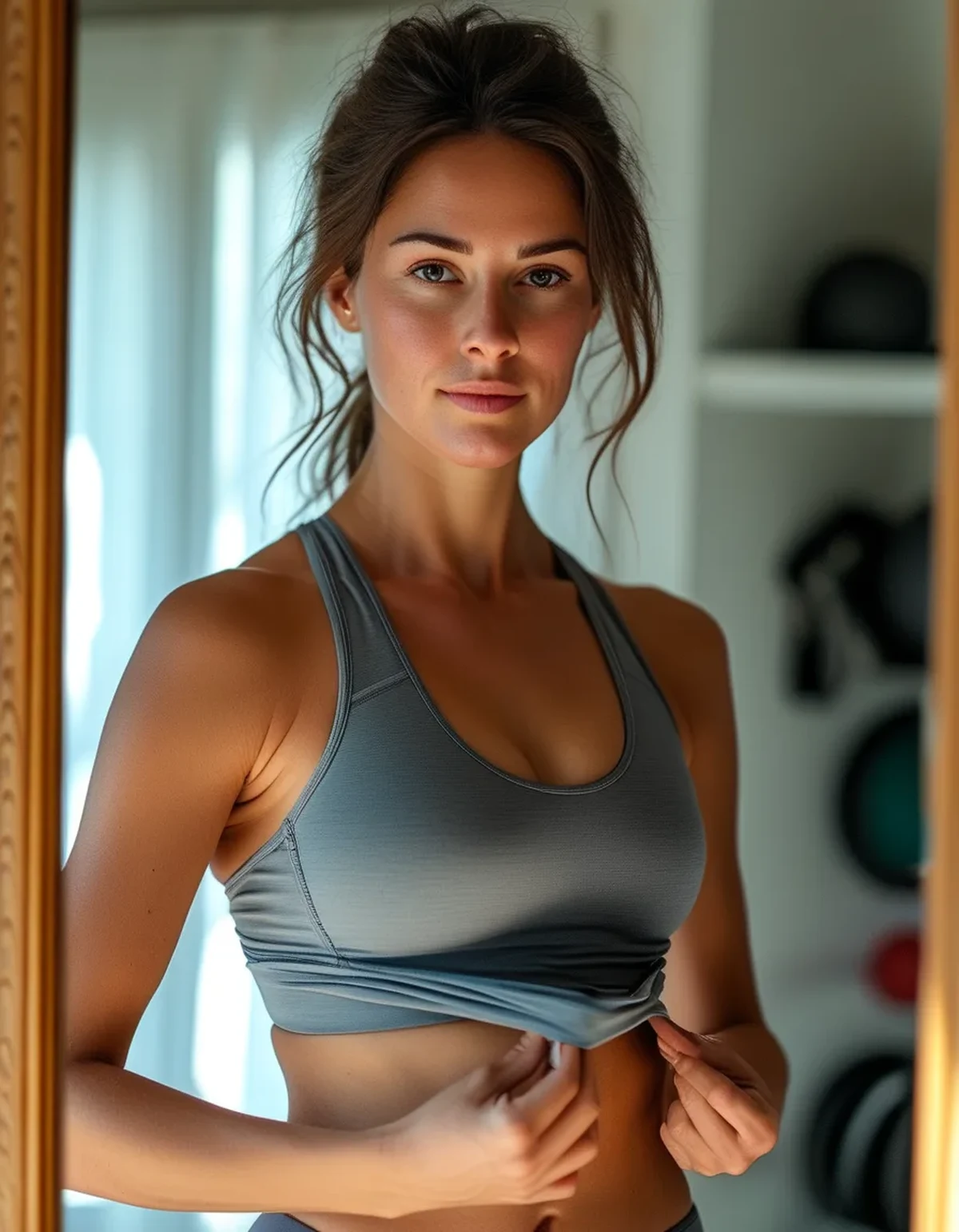
Why does the widest point determine everything?
Because fabric always settles at the narrowest place it can reach, and gravity is not strong enough to hold it below a wider point.
Picture a fitted top on a frame that is widest at the midsection. The hem has to pass over that widest point to hang below it. If the hem circumference is only slightly larger than the widest point, the fabric is under tension there - and any movement gives it an excuse to ride up to a place where the tension releases.
This is why the top stays put on a friend with a different shape and climbs on you. It is not fit failure. It is geometry: the garment was cut assuming the widest point is at the hip, so its hem is the widest part of the top. On an apple-shaped frame, the widest point is higher, and the hem is now the tightest part of the garment sitting below the widest part of the body.
What follows from that: the fix is either more fabric at the midsection specifically, or enough length that the hem sits well below the widest point where there is room to spare. Sizing up gives you more fabric everywhere, including the shoulders and bust where you did not need it.
What should you actually look for in a top?
Four features, in order of how much they matter.
1. Length. Measure a top that stays put and one that does not, from the shoulder seam to the hem. The difference is usually the whole story. Aim for a body length that puts the hem at least 5cm below your widest point when standing. In practical terms this usually means looking at longline styles rather than standard ones.
2. Cut through the waist. A straight cut or a slight A-line has room to pass the widest point without tension. A top that nips in at the waist and flares at the hip is designed for the opposite shape and will always climb.
3. Hem construction. A plain flat hem or a bonded hem is what you want. An elasticated or gathered hem is the single worst feature for this problem - it grips at the narrowest circumference available, which means it actively climbs to find one.
4. Fabric weight and drape. A slightly heavier fabric with drape hangs down. A very light, clingy fabric follows the body and rides with it. Modal and heavier jersey blends outperform thin polyester here.
A useful shortcut when shopping online: look at whether the product photos show a side view. The side view tells you about the cut through the middle in a way the front never does.
Is the problem actually at the shoulders?
Often, yes - and this is the diagnosis people miss entirely.
A top can ride up from below, which is the geometry problem above. It can also ride up from above, which is a completely different cause. If the shoulders or armholes are too tight, then every time you raise your arms the whole garment gets pulled upward, and it does not come all the way back down.
The test: stand in front of a mirror, arms down, and note where the hem sits. Raise both arms overhead. Lower them. Look again. If the hem is noticeably higher and stays there, the top is being dragged up by the shoulders, not pushed up by the midsection.
The fix for that is different: a wider armhole, a raglan or drop-shoulder construction, or more stretch across the upper back. A racerback with a narrow shoulder strap is often the worst offender, since there is very little fabric to distribute the pull.
Why this matters: if you have a shoulder-pull problem and you buy a longer top, it still rides up - just from a longer starting point. Diagnosing which of the two is happening saves a lot of wasted purchases, and a fair number of people have both.
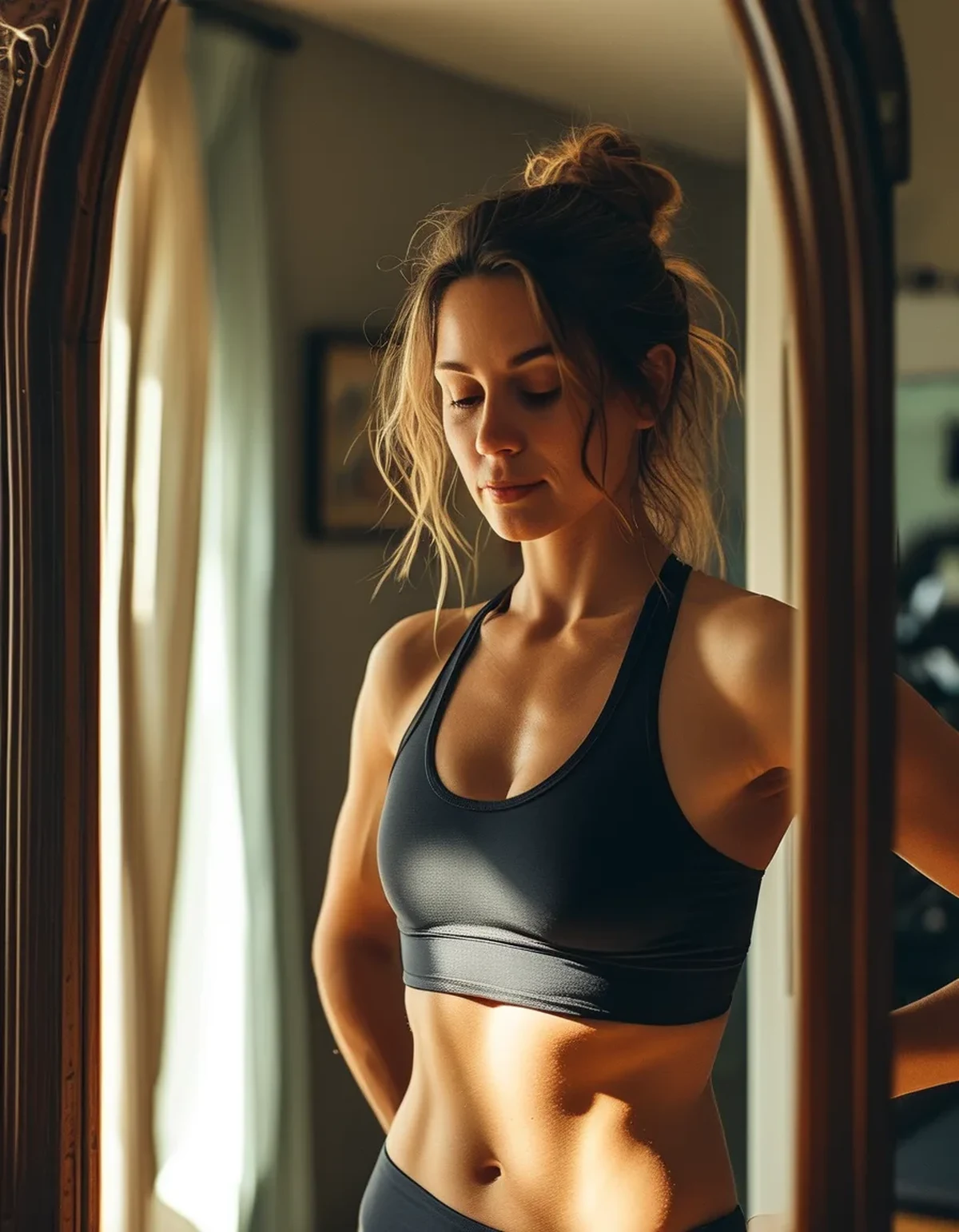
Myth vs Fact: Tops That Ride Up
Myth: Sizing up fixes it. Fact: It adds circumference everywhere, so the shoulders and bust become loose while the length only increases slightly - most brands add very little body length between adjacent sizes. You end up with a baggy top that still climbs.
Myth: A tighter top will grip and stay put. Fact: A tighter top has more tension at the widest point, which gives it more reason to climb. Compression tops that stay put do so through length and fabric recovery, not through tightness alone.
Myth: It is a body problem you need to change. Fact: It is a pattern-cutting problem. Most activewear is graded from a fit model with the widest point at the hip, and any frame with a different distribution gets a garment cut for someone else. That is a manufacturing choice, not a fault in you.
Myth: Tucking it in solves it. Fact: Tucking into a high waistband works well, and it is a legitimate answer - but it changes the outfit and it only works with high-rise bottoms. Worth knowing, not a universal fix.
Myth: All longline tops work. Fact: A longline top with an elastic hem is worse than a standard top with a flat hem. Hem construction outranks length, which surprises almost everyone who has been buying by length alone.
What is the outfit combination that reliably works?
Two configurations that solve it structurally rather than by hoping.
Option one: the tucked high-rise. A high-rise legging with a wide waistband, with a fitted top tucked in. The waistband physically holds the hem. This is the most reliable solution available, and it also gives a clean line through the middle. Choose a bottom with a genuinely wide band - roughly 10cm or more - so it grips over an area rather than a line.
Option two: the longline over the band. A top that ends 5 to 10cm below the widest point, worn over a high-rise bottom. The overlap means that even if the top moves a little, nothing is exposed and nothing needs adjusting. Choose a flat hem and a fabric with a bit of weight.
The layer that rescues either: an open overshirt, a zip-through, or a light long cardigan. It provides a vertical line down the sides, which is visually lengthening, and it means the top underneath matters less.
What to avoid: cropped tops with mid-rise bottoms, elastic hems, and very light clingy fabrics. Each of them is individually manageable and all three together guarantee a session spent pulling the hem down.
FAQ: Riding-Up Questions, Answered
Should I just buy longline tops from now on?
Longline helps a lot, but check the hem is flat rather than elasticated and the cut is straight rather than fitted at the waist. A poorly constructed longline top still climbs.
Do bodysuits solve this?
Completely, which is why they are popular for this exact reason. The trade-off is bathroom convenience and heat, so most people use them for specific sessions rather than everything.
Why does it happen more with some activities?
Anything with repeated overhead movement or floor-to-standing transitions gives the fabric more opportunities to migrate. Yoga and lifting both surface the problem faster than steady cardio does.
Are there fabrics that stay put better?
Heavier jersey, modal blends, and fabrics with good recovery all hold position better than thin, slippery polyester. Ribbed fabrics also tend to sit better because the texture creates a little friction against the body.
Will a longer top look shapeless on me?
Not if the cut is right. A straight or slightly A-line longline top with a defined shoulder reads as deliberate. What reads as shapeless is a top that is longer and wider, which is what happens when people size up instead of choosing length.
TL;DR:
- Tops ride up because their widest point sits above your widest point - it is geometry, not size
- Prioritise length, then a straight or A-line cut, then a flat hem, then fabric weight
- Elasticated hems are the worst feature for this and outrank length as a problem
- Test whether it is shoulder pull instead: raise your arms and see if the hem stays high
- The high-rise tuck and the longline overlap are the two reliable configurations
Almost every top that rides up was cut for a body with its widest point at the hip. Once you stop treating that as a sizing problem and start reading the length, cut, and hem before you buy, the problem largely disappears without a single item in a larger size.
See It in Motion
Seen here: Racerback Tank Top - White — shop similar styles on bubblelime.com
Keep Reading
This article is for general informational and styling purposes only. Fit, sizing, and product availability may vary.
