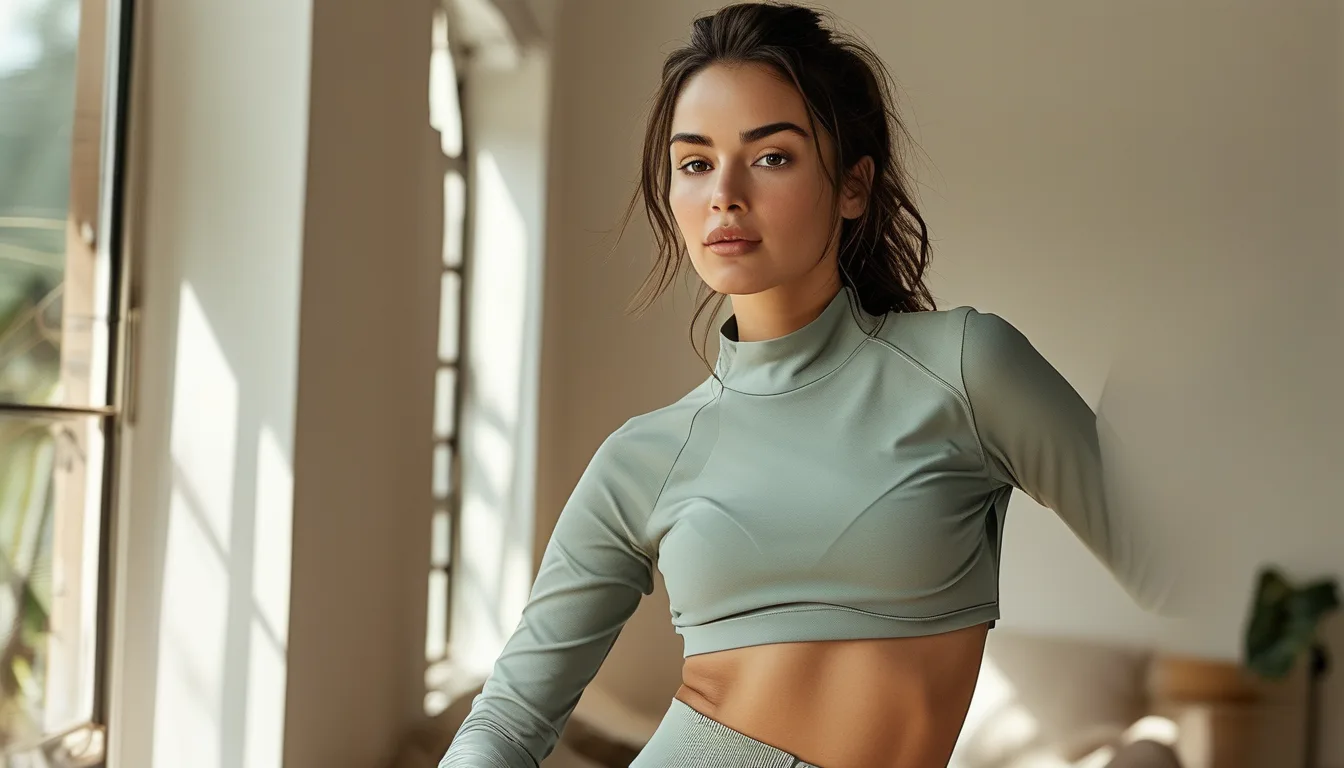
Why Sports Bras Never Fit Right on an Apple Shape (It Is the Ribcage, Not the Cup)
Quick Answer: On an apple-shaped frame, the ribcage is often proportionally wider relative to the underbust measurement that bra sizing assumes. That means standard bands sit tight at the ribs and ride up at the back while the cups fit fine. The fix is usually a wider band, a different band construction, or a size up in band with a size down in cup - not a different size overall.
If every sports bra you own digs in at the ribs but the cups are fine, you are not sizing wrong. The garment is graded on an assumption your body doesn’t share.

What is actually happening with the band?
The band carries the load, and that’s where the mismatch shows.
A sports bra band should provide most of the support - commonly cited as around 80% of it, with the straps handling the rest. That means the band is under real tension, and any mismatch between your ribcage shape and the band’s grading shows up as pressure rather than looseness.
On an apple-shaped frame, weight and volume distribute toward the midsection, which frequently means a wider ribcage and a fuller upper torso relative to the underbust number a size chart uses. Bra grading assumes a relatively fixed relationship between underbust circumference and torso depth. When your torso is deeper front-to-back than that grading assumes, the same circumference wraps differently and concentrates pressure at the sides.
The symptoms follow directly:
- Band digs at the sides under the arms
- Band rides up at the back during movement
- Red marks after wearing that take a while to fade
- Cups fit perfectly, which makes the whole thing confusing
How do you tell if the band or the cup is the problem?
Four checks, all doable in a fitting room in two minutes.
1. The back line test. The band should sit level all the way around, parallel to the floor. If it rides up at the back into a U shape, the band is too loose in circumference or too narrow for your frame - counterintuitively, riding up usually means the band isn’t providing enough support, so it’s migrating to where it can grip.
2. The two-finger test. You should be able to slide two fingers under the band with some resistance. If you can’t get one finger under, it’s genuinely too tight, not just snug.
3. The arm raise. Raise both arms overhead. The band should stay put. If it lifts significantly, the band isn’t doing its job regardless of how tight it felt standing still.
4. The breathing test. Take a deep breath in a high-support bra. It should be noticeably snug and it should not prevent full expansion of your ribs. Sports bras that restrict breathing affect training directly, and this is a specific problem on frames with wider ribcages.
If checks 1 and 3 fail but the cups look right, you have a band problem and you should be shopping for band construction rather than a different size.
What band construction actually works better?
Three features make a meaningful difference and are worth filtering for.
Wider bands. A 5-8cm band distributes the same support force over more surface area than a 2-3cm one, which reduces the pressure at any single point. This is the highest-return feature for anyone getting rib discomfort, and it’s easy to see in a product photo.
Hook-and-eye or adjustable closures rather than pull-over. Pull-over compression bras are graded with a fixed circumference and no adjustment, which means the fit is either right or it isn’t. An adjustable band lets you set the tension yourself, and it also lets you tighten it as the band relaxes over months of wear.
Encapsulation rather than pure compression. Compression bras work by flattening against the chest, which loads the band and the ribcage more. Encapsulation styles support each side separately, which distributes the work differently and is usually more comfortable at higher support levels.
What to avoid: narrow elastic bands with no adjustment, underband seams that sit directly on the ribs, and bonded panels with no give across the back.

What Nobody Tells You About Sports Bra Fit on a Fuller Midsection
Sister sizing works here and almost nobody uses it. If a band is too tight, going up one band size and down one cup size keeps roughly the same cup volume with a larger circumference. A 34C and a 36B hold similar cup volume with a 5cm difference in band. This single technique solves a large share of apple-shape band complaints and costs nothing to try.
Longline styles often fit better, for a structural reason. A longline sports bra extends further down the torso, which spreads support across a taller band and reduces the pressure concentrated at one rib level. They also don’t create the horizontal line across a fuller midsection that a short band does.
Band tension changes through the day and through your cycle. Bloating and normal fluid shift affect the ribcage measurably. A bra that’s perfect in the morning can be genuinely uncomfortable by evening, which is another argument for adjustable closures.
Bras loosen with wear. Elastic fatigues, and a band that was correct at purchase will be looser in six months. This is why bras are commonly fitted on the loosest hook - so there’s tightening available later.
Impact level should drive the choice more than appearance. High-impact activity needs high-support construction, and trying to use a light-support style for running is where most discomfort originates regardless of body shape.
And measure your underbust yourself rather than relying on a size you were told years ago. Ribcage measurement changes with training, age, and body composition, and a lot of persistent fit problems trace back to an out-of-date number.
How should you actually shop for one?
A short, practical process.
Measure underbust directly against skin, snug, exhaling normally. Write the number down with the date. Then measure at the fullest point of the bust for the cup calculation.
Filter by band width and closure type first, before style or colour. Most retailers let you see both from the product image.
Buy two sizes when ordering online - your calculated size and the sister size with the larger band. Return one. The cost is a return label; the benefit is actually finding the fit.
Try it with movement, not standing still. Jump, run on the spot, raise your arms. A band that’s comfortable standing and rides up when you move is not the right band.
Check the back specifically in a mirror. The level-band check is the single most informative thing you can look at, and it’s the one you can’t see without turning around.
And replace them on a realistic timeline. Frequently worn sports bras generally last 6-12 months before band elasticity degrades noticeably. A stretched-out band is a support problem, not just a comfort one.
FAQ: Apple Shape Sports Bra Questions, Answered
Should the band feel tight?
Snug, yes. Two fingers should slide under with resistance. It shouldn’t restrict breathing or leave marks that persist for hours.
Why does my band ride up at the back?
Usually the band is too loose in circumference for the support level, so it migrates. Going down a band size and up a cup size is the standard fix.
Are longline bras better for a fuller midsection?
Often yes - the support spreads over a taller band and there’s no single tight line across the ribs. They’re worth trying even if you’ve never considered the style.
Do I need different bras for different activities?
For high-impact activity, yes - a light-support bra used for running is the most common source of both discomfort and inadequate support.
TL;DR:
- Band pressure on an apple shape is usually a ribcage-proportion mismatch, not a sizing error
- Riding up at the back means the band is too loose, not too tight
- Prioritise wide bands, adjustable closures, and encapsulation over pure compression
- Sister sizing - up a band, down a cup - solves a large share of these cases
- Longline styles distribute support better across a fuller midsection
The cups were never the problem. Shop the band and most of this disappears.
See It in Motion
Seen here: Racerback Tank Top - White — shop similar styles on bubblelime.com
Keep Reading
This article is for general informational and styling purposes only. Fit, sizing, and product availability may vary.