Why Mid-Rise Trousers Often Beat High-Rise on an Apple-Shaped Frame
Quick Answer: High-rise trousers work by sitting at the narrowest part of the torso - but on an apple-shaped frame, the narrowest point is often higher than a standard high-rise lands, so the waistband sits on the widest part instead and pushes soft tissue upward. A mid-rise that sits below the fullest point, or a genuinely high rise that clears it, both work better than the in-between rise most brands sell as high-waisted.
Every style guide says high-rise is universally flattering. If you’ve tried it on an apple-shaped frame and it dug in, rolled down, or created a shelf you didn’t have before, that isn’t a fitting failure. It’s a mismatch between where your narrowest point is and where the industry puts a waistband.
Why does the standard high-rise recommendation fail here?
The logic behind high-rise is sound: a waistband sitting at the narrowest part of the torso creates a defined line and makes the leg read as longer.
The problem is that ‘the narrowest part’ isn’t in the same place on everyone. On many frames, the narrowest point sits roughly at or just above the navel. On an apple-shaped frame, where soft tissue is carried around the midsection, the narrowest point is often higher - up near the base of the ribcage - and the widest point is at or just below the navel.
Most trousers marketed as high-rise land at around 28-30cm rise, which puts the waistband at or just below the navel. On an apple-shaped frame that’s frequently the widest circumference, not the narrowest.
The consequences follow directly:
- The band sits on the fullest point, so it needs to be sized up, which then makes it loose everywhere else
- Soft tissue above the band gets pushed upward, creating a visible line
- The band migrates down through the day, because a waistband on a curve that widens above it has nowhere stable to sit
None of this is a body problem. It’s a geometry mismatch.
What does a mid-rise actually do differently?
A mid-rise - roughly 23-26cm - sits below the fullest part rather than on it, which changes three things.
It stays put. A band sitting below the widest circumference is held in place by the curve above it rather than fighting it. This alone resolves the migration problem that makes high-rise trousers so frustrating.
It doesn’t compress the midsection. No compression means no tissue displacement and no visible line through a fitted top.
It creates a cleaner line under layers. Because there’s no band pressing into soft tissue, a fitted top or a tucked shirt lies flat rather than showing the outline of a waistband.
The trade-off is real: mid-rise gives up some of the leg-lengthening effect that high-rise provides, and it doesn’t offer the same midsection coverage some people want.
Which is why the other solution is worth knowing about too.
What about going genuinely higher instead?
The other working answer is a true high rise - 32cm or more - that clears the fullest point entirely and sits up near the base of the ribcage, at the actual narrowest point.
This is the option that delivers everything high-rise promises. The catch is finding it: most mainstream brands top out around 30cm and call it high-waisted, which is precisely the rise that doesn’t work here.
Where to look: paper-bag waist styles, wide-leg trousers designed for tucking, and some tall-range trousers (which often add rise as well as leg length).
What to check in the fitting room: put your hand flat between the waistband and your body while standing normally. If it sits comfortably above the fullest point with no compression, that’s the right rise. If it’s pressing into the widest part, size the rise up rather than sizing the whole trouser up.
Fabric matters enormously at this rise. A structured, non-stretch fabric at a true high rise can be uncomfortable when sitting. Look for a small amount of elastane (2-3%) or a soft-tailoring fabric with natural give.

Myth vs Fact: Rise and Apple-Shaped Frames
Myth: High-rise is universally flattering. Fact: High-rise works when the waistband lands on the narrowest part of a given torso. When it lands on the widest, it does the opposite of what it’s supposed to.
Myth: If a waistband rolls down, you need a smaller size. Fact: Rolling is usually a rise problem, not a size problem - the band is sitting on a curve that widens above it. A smaller size makes the compression worse without fixing the position.
Myth: Low-rise is the alternative to high-rise. Fact: There are three options, not two, and mid-rise is the one most likely to work here. True low-rise brings its own stability problems.
Myth: Compression garments or shapewear solve a rise mismatch. Fact: They redistribute rather than resolve, and they add a comfort cost. Getting the rise right removes the reason for them.
Myth: You can tell the rise from the label. Fact: ‘High-waisted’ means very different measurements across brands. Measuring the rise yourself - from the crotch seam to the top of the waistband at the front - is the only reliable method.
How do you actually shop for this?
Measure your own narrowest point first. Stand in front of a mirror, run your hands up your sides, and find where your torso is genuinely narrowest. Measure from there down to your crotch. That number is your target rise, and it’s more useful than any size chart.
Measure the rise on trousers you already own - the ones that work and the ones that don’t. The pattern usually becomes obvious within three pairs, and now you have a number to shop against.
Read product measurements, not adjectives. Many retailers list front rise in the product details. That number tells you more than ‘high-waisted’ ever will.
Prioritise waistband construction. A wide, soft, slightly curved waistband handles a full midsection far better than a narrow rigid straight-cut band. Contoured waistbands - cut with a curve rather than a straight strip - are worth seeking out specifically.
Try sitting down in the fitting room. Standing fit and sitting fit differ substantially at any rise, and the sitting test is what predicts whether you’ll actually wear them.
Consider alterations. Taking in a waistband on trousers that fit everywhere else is one of the cheapest and most effective alterations available, typically far less than the cost of continuing to buy trousers that don’t work.
FAQ: Apple Shape Trouser Rise Questions, Answered
What rise measurement should I be looking for?
It’s individual - measure from your own narrowest point to your crotch. But as a rough orientation, if standard high-rise (28-30cm) sits on your fullest point, look at either 24-26cm or 32cm+ rather than in between.
Does this apply to jeans as well as trousers?
Yes, and more so - denim has less give, so a rise mismatch is less forgiving. The same measuring approach applies.
What about leggings and activewear?
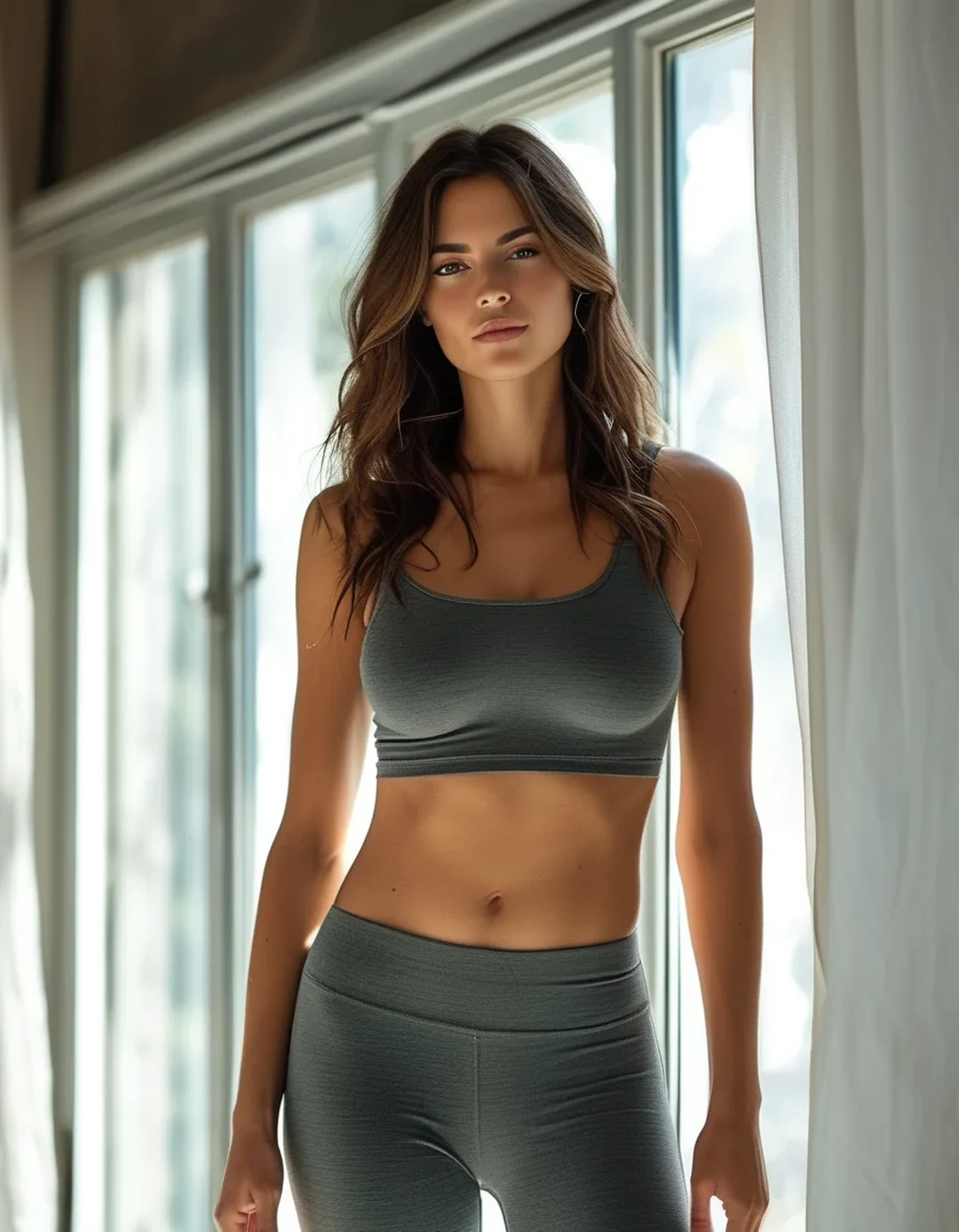
Activewear waistbands are usually wide and soft, which handles a full midsection better than rigid tailoring. True high-rise activewear often works well where high-rise trousers don’t.
Is a paper-bag waist a good option?
Often yes - the gathered construction sits high, clears the fullest point, and the volume at the top is soft rather than compressive.
TL;DR:
- High-rise works by sitting at the narrowest point - which on an apple-shaped frame is often higher than standard high-rise reaches
- Standard 28-30cm high-rise frequently lands on the widest point, causing digging, rolling, and migration
- Mid-rise (below the fullest point) and true high-rise (above it) both work; the in-between doesn’t
- Measure your own narrowest point and shop against that number, not against the label
- Wide, contoured waistbands outperform narrow rigid ones at every rise
The trousers weren’t wrong for you. The rise was measured for a different geometry.
Keep Reading
This article is for general informational and styling purposes only. Fit, sizing, and product availability may vary.
